To prepare for the Bitesize session this week, I’ve looked into a brief history of music in films. It is summarised as follows :
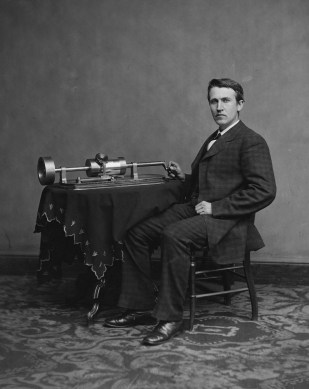
The start of it all was Edison’s Phonograph and Muybridge’s moving images. Even though they didn’t really know how to make it work together back then it was the beginning of even greater things.
THE SILENT ERA
- Sound and motion pictures were quite separated. The score was performed live or played on a phonograph in theatres and they were trying to figure out how to synchronise them.
THE GOLDEN AGE
- The start of leitmotif a method which uses specific instruments/themes for specific characters in the film. It was first used by Max Steiner a.k.a. the father of film music in KING KONG (1933)
- It was also the beginning of the long collaborative relationship between Bernard Hermann and Alfred Hitchcock.
THE 50’S
- The film High Noon (1952) used “Oh My Darling” in their promotions which became a huge success so the industry followed suit and started making original songs for films and soundtrack albums.
- Miles Davis’s score for the Gallows was the first pure jazz film score and paved way for other African American musicians.
THE 60’S
- The era introduced more jazz and western music to film.
- The term “Temp Love” was introduced when 2001 : A Space Odyssey used a temporary soundtrack from the edit instead of an original written song as the final film score because the director simply fell in love with it.
THE 70’S
- Synth and computer-sounds instruments were used in film scores.
- The advance technology allowed a composer to create soundtracks from a program rather than a huge ensemble of instrumentalists/musicians.
- STAR WARS soundtrack became one of the most memorable film music in history thanks to John Williams.
THE 80’S
- The birth of many famous songs from films like Ghostbusters and Footloose.
- We can hear less and less use of orchestral sounds and more computer-generated sounds because of technology advancements and the popularity of synthesizers.
- The start of Danny Elfman x Tim Burton and the rise of Hans Zimmer.
NOW
- Film scoring is incredibly diverse now and we can also see a wave of musicians from bands diving into film music. For example : Radiohead’s Jonny Greenwood, Nine Inch Nail’s Trent Reznor (which I love his score for The Social Network very much) and Arcade Fire’s Win butler.
So that was an extremely short history.
Personally, I’ve always love film scores and how they can effect everything in the film. Some films I love purely because of how well the soundtracks are used or the score itself. Unfitting or mediocre music in film can really turn a well made film into a really bad one. Music is a huge part of my life and my work. The only form of happiness that will forever be certain.
Here are some scenes from various films that I’ve chosen. Some of them I love just because of the songs that they used and how they perfectly portray the emotion of the scenes.
1. Blue Valentine (2010) by Derek Cianfrance – not really a scene but the end credits which completely destroyed me when I first watched it. The film itself is really hard to watch because it was so raw and heartbreaking and then the director chose to hurt you even more by showing all the happy moments at the end together with the fleeting fireworks. The song “Alligator” by Grizzly Bears work so well I don’t really know how to explain it. It follows with the song “You Always Hurt The One You Love” which was sung by Ryan Gosling in the film. I felt extremely heavy after.
2. Under The Skin (2013) by Jonathan Glazer – the victim scene is a very good example of how to make visually stunning horror scene. The act itself is very terrifying. The coldness and mystery of how she devoured her victims was very unique to me. The film overall tone is quite slow but I remember the sad ending and the film score very well. The strings are the main instruments of this film and for this particular scene I find that the music portrays the sense of doom and creepiness really well. The notes are scorchingly high and haunting. The score really gets into your head making you feel like you can’t escape.
3. Lady Bird (2017) by Greta Gerwig – The film struck me in some kind of way due to the timing of when I first watch it. I had recently moved from Bangkok to London and the feelings Lady Bird felt when she finally got to New York was relatable to me. It was the feeling of looking back to your hometown and your family. The feeling of loneliness but also realisation. Her complicated relationship with her mom is one almost every daughter can understand. The phone call in this scene was put together really well. The music in the background is warm but fragile resembling the flickering sunlight shining through the trees.
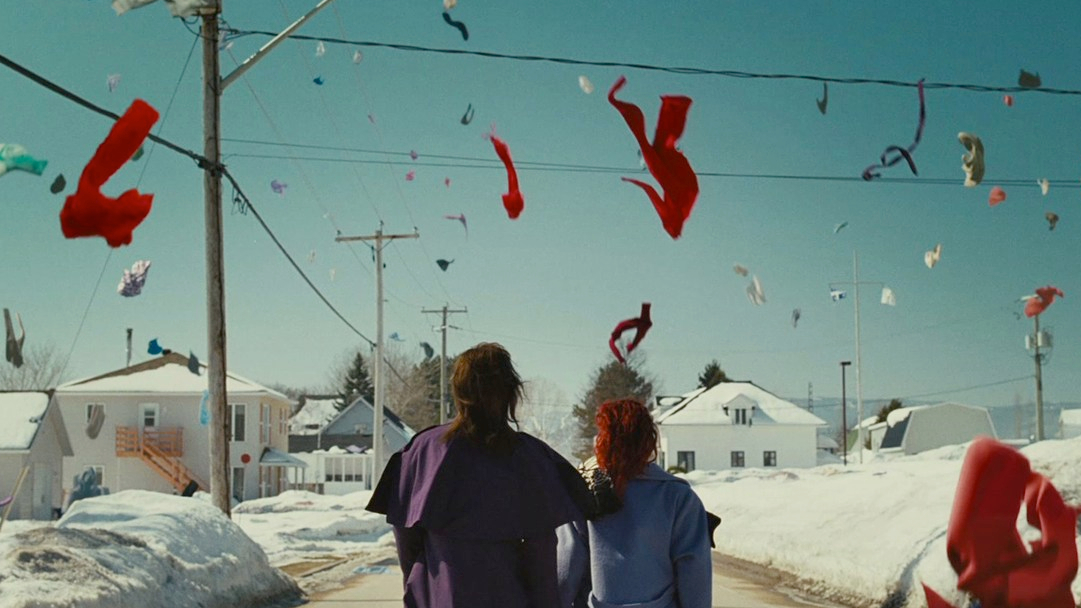
4. Laurence Anyways (2012) by Xavier Dolan – Sometimes I feel like the world is so unfair that someone like Xavier Dolan exists. Good-looking, Young and a genius filmmaker. This film was very heartbreaking but also extremely well presented from the colour palettes to typography. Some of the scenes in the film played out like a music video and Dolan used a very good selection of music from current artists and 80’s music. This scene is memorable for me because of how visually striking it is and maybe it’s the perfect visual for Moderat’s “A New Error”.
5. Ruby Sparks (2012) by Valerie Faris and Jonathan Dayton – It’s a very dark scene in a seemingly light-hearted romantic comedy which creates a whole new depth to the film. The protagonist manifested a real girlfriend through his writing but abused this power which resulted in this scene. It represents a very dark side to the fantasy love story. The music is of course is a dramatic score composed with string instruments with a build up to intensifies the madness. The overall score of the film is brilliant as well. (I truly do not understand why the guy who upload this scene chooses to say “funny scenes”)
6. Annie Hall (1977) by Woody Allen – Although Woody Allen himself is kind of a creep, his works are really hard not to like. This particular ending from Annie Hall is one of my favourite film endings of all time. It’s really the quote “It reminds me of that old joke- you know, a guy walks into a psychiatrist’s office and says, hey doc, my brother’s crazy! He thinks he’s a chicken. Then the doc says, why don’t you turn him in? Then the guy says, I would but I need the eggs. I guess that’s how I feel about relationships. They’re totally crazy, irrational, and absurd, but we keep going through it because we need the eggs.” that makes it so memorable. Now that I look back it’s also the set up: the view from the window, the crossing sign “DON’T WALK” and how the song and the pacing of the quote fit together so perfectly.
To me, it’s the music that makes all these scenes. It’s a very important companion to moving images. I’ve also realised that I love endings. If I were to continue this list it will be more endings to come. Maybe I like summarisation, the way things end up, the way the story came together or apart. What makes a great ending even better is the perfect music to leave the theatre to.
Honorable mentions :
- (500) Days of Summer – every component is so well selected and designed especially the film score making it stands out from the rest of the romantic comedies
- HER – the geniuses of Win Butler of Arcade Fire capture the feeling of loneliness perfectly in minimal score
- La La Land – I know it’s been done but this is a very well executed film with memorable music. The epilogue scene is one of the most triumphant finale I’ve ever seen. (again with the endings)
- Marie Antoinette – Modern music in a period film is something absurd at the time. Pairing Versailles aesthetics with Phoenix and The Strokes was a genius move.
- The Perks of Being A Wallflower – Probably everyone’s favourite scene. The tunnel scene was iconic thanks to David Bowie’s “Heroes” creating the “infinite” feeling.

 td @ ual